UNESCO World Heritage Site Complete Guide
The Valley of Flowers Trek is a bucket-list adventure for trekkers seeking the mystical side of the Himalayas. Did you know that the risk of altitude sickness on high Himalayan treks is over 30% for unacclimatized travelers? The Valley of Flowers, though moderately high, is a gentler ascent that still requires mindful preparation.
The Valley of Flowers Trek in Uttarakhand, India, is a UNESCO World Heritage Site and one of the most breathtaking alpine flower meadows in the world. Located at 3,658 meters (12,000 ft), this moderate-difficulty trek spans 55 km round-trip, typically completed in 6–7 days. Best visited from July to early September, the trek starts from Govind Ghat and passes through Ghangaria before entering the Valley of Flowers National Park. Trekkers need a forest permit, and the route is closed in winter due to snow. Ideal for nature lovers and photographers, the trail offers views of rare flora, Pushpavati River, and Mt. Kamet. Super Trekkers offers guided, eco-friendly expeditions with expert support.
Valley of Flowers Trek: By the Numbers
Quick Facts: Valley of Flowers Trek
| Parameter | Details |
|---|---|
| Height | 14,400 ft (Valley of Flowers), 15,200 ft (Hemkund Sahib) |
| Trek Distance | ~38km round trip |
| Duration | 6 days (from Govindghat) |
| Difficulty | Moderate |
| Ideal Season | Mid-June to mid-September |
| UNESCO Site Since | 2005 |
| Starting Point | Govindghat |
| Closest Town | Joshimath |
| Permit Required | Yes (Forest) |


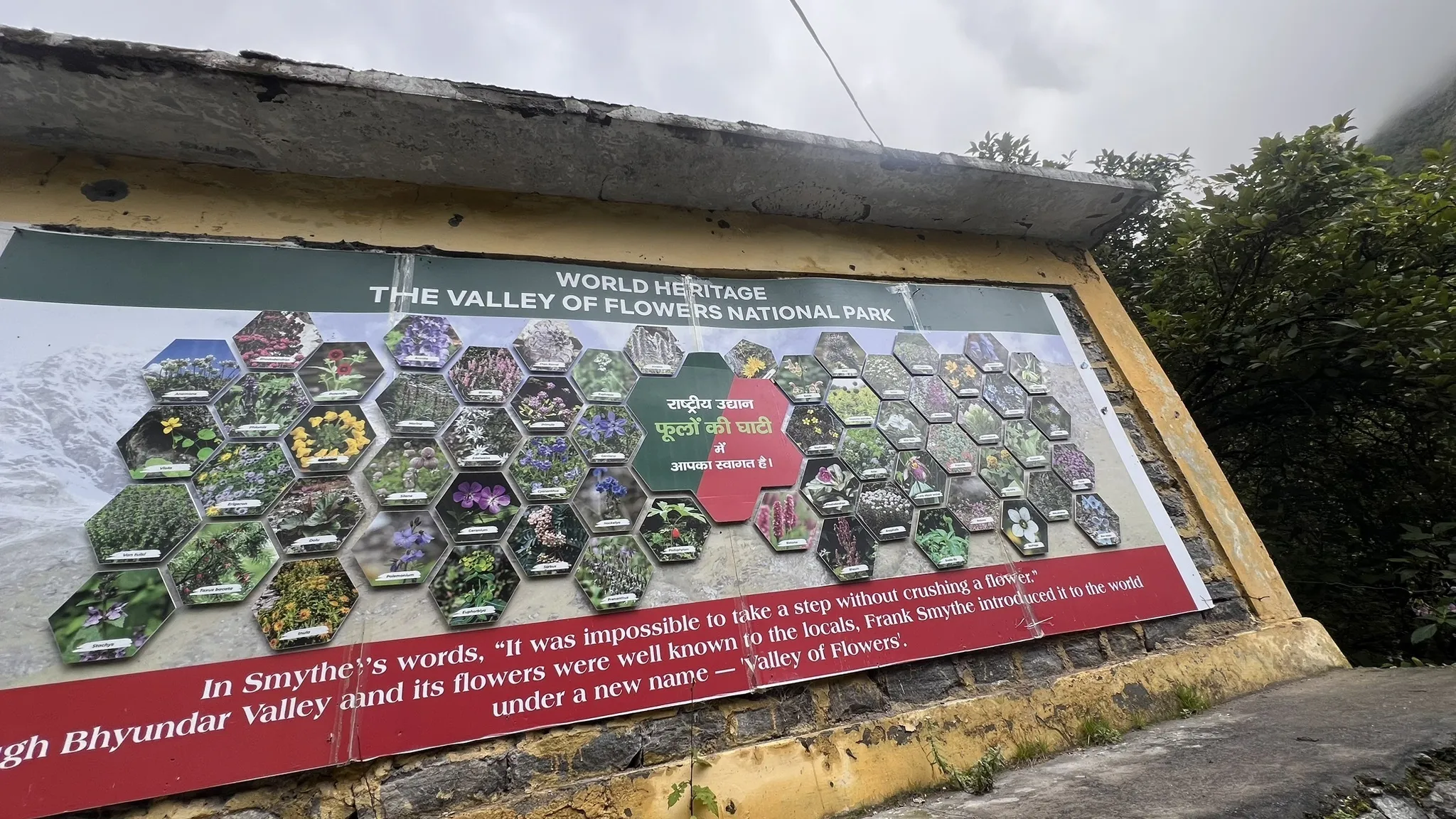
Why Trek the Valley of Flowers?
- UNESCO World Heritage Site recognition
- Home to over 500 species of wildflowers
- Breathtaking glaciers, waterfalls, and rivers
- Best trek for beginners wanting a mid-altitude Himalayan experience
- Optional detour to Hemkund Sahib, a sacred Sikh pilgrimage lake
- A vibrant floral spectacle, views of snow-capped peaks, and the serene Hemkund Sahib Gurudwara.
Attractions: Beyond the Blooms
While the flowers are the main draw, the Valley of Flowers and its surroundings offer more to explore:
- Pushpawati River: This glacial river flows through the valley, adding a soothing soundtrack to your journey.
- Hemkund Sahib: A high-altitude Sikh Gurudwara and a revered pilgrimage site, its serene lake is said to be the place where Guru Gobind Singh meditated.
- Brahma Kamal: Uttarakhand’s state flower, this rare and beautiful flower is found in abundance here.
- Wildlife: Keep an eye out for diverse flora and fauna, including musk deer, brown bears, and Himalayan Monal, the state bird of Uttarakhand.
Valley of Flowers Trek Route & Itinerary
A typical itinerary for the Valley of Flowers trek is a 6-day journey that also includes a visit to the sacred Hemkund Sahib. This route is highly recommended to fully experience the region’s beauty and spiritual significance
Day 1: Rishikesh to Govindghat (Drive – 10–12 hours)
The journey begins with a long but scenic drive through the Garhwal Himalayas. The route follows the Alaknanda River, offering stunning views and a glimpse into the region’s culture. You’ll spend the night in Joshimath or a nearby town, acclimatizing to the altitude.
Day 2: Govindghat to Ghangaria (Trek – 9 km, 4–5 hours)
A short drive from Joshimath leads you to Govindghat, the starting point of the trek. From here, the 14 km trail to Ghangaria begins. The path is well-laid and follows the Pushpawati River. Ghangaria is a small settlement and the base camp for both the Valley of Flowers and Hemkund Sahib.
Day 3: Ghangaria to Valley of Flowers (Trek – 4 km, 3–4 hours)
This is the day you’ve been waiting for! A short 3 km trek from Ghangaria leads you to the entrance of the Valley of Flowers, filled with rare flowers like Blue Poppy, Brahma Kamal, and Cobra Lily.
Spend the day exploring the vast, blooming landscape. The trail inside the valley is a 7–8 km stretch, with the Pushpawati River meandering through it. Remember, you must return to Ghangaria by evening as camping is not permitted inside the valley.
Day 4: Ghangaria to Hemkund Sahib (Trek – 6 km, 4–5 hours)
The trek to Hemkund Sahib is a steep, 6 km ascent. The trail is challenging but rewarding, offering panoramic views of the Himalayan peaks. Hemkund Sahib is a high-altitude 15,200 ft. Gurudwara situated beside a glacial lake. After spending some time soaking in the peaceful atmosphere, you’ll descend back to Ghangaria.
Day 5: Ghangaria to Govindghat
Today, you’ll retrace your steps, trekking down from Ghangaria to Govindghat. The descent is much easier and faster. From Govindghat, you’ll drive back to Joshimath for the night, celebrating the successful completion of the trek.
Day 6: Joshimath to Rishikesh/Haridwar
The final day involves the long drive back, filled with memories of the vibrant valley and the serene Gurudwara.
Valley of Flowers Trek Route Map
- Starting Point: Govindghat (1,800m)
- Pulna: Last road head
- Ghangaria: Trek base camp (2,900m)
- Valley Entrance: 3,250m
- Valley Core: 3,500–3,600m (Valley of Flowers proper)
- Hemkund Sahib: 4,300m (steep detour)
How to Reach Valley of Flowers
- By Air: Fly to Jolly Grant Airport (Dehradun).
- By Train: Rishikesh railway station is nearest.
- By Road: Buses/cabs to Joshimath, then Govindghat, then Pulna (shared jeeps available).
Note: Super Trekkers can arrange all transfers, permits, and logistics for you.
Packing Guide: What to Carry
| Item | Details |
|---|---|
| Rain jacket/trousers | Waterproof (essential for monsoon season) |
| Trekking shoes | Ankle support, grippy sole |
| Backpack | 35–50L, rain cover |
| Warm layers | Fleece, jacket, gloves, cap |
| Sunglasses | UV protected |
| Water bottles | 2L minimum |
| Basic medications | Prescribed, altitude, pain relievers |
| Energy snacks | Dry fruits, bars, chocolates |
| Permits/ID | Forest permit, photo ID |
| Camera/phone/powerbank | For photos, navigation |
| Toiletries | Biodegradable soap, tissues |
Permits & Regulations
- Forest Entry Permit: Issued at Ghangaria checkpoint; carry ID.
- Restricted Plastic Use: Only biodegradable items allowed.
- No Camping in Valley: Stay only in Ghangaria.
Important Links:
- Uttarakhand Forest Department
- Weather Forecast: Joshimath
- Route Info: Indian Himalayas
- Joshimath to Govindghat: Bus Timings
- IMD Weather Alerts
Your journey to the Valley of Flowers promises awe, challenge, and transformation. With careful planning, right gear, and a trustworthy guide, your experience will be unforgettable. Don’t underestimate the logistics, weather, or risks—let Super Trekkers handle the details, so you can focus on soaking in the Himalayan grandeur.
Book your Valley of Flowers Trek with Super Trekkers today for a trip that blends adventure, culture, and nature in one seamless package.
FAQs
What is the best time for the Valley of Flowers Trek?
Mid-July to mid-August is the peak bloom season, though the valley is open from June to early September.
Is Valley of Flowers Trek safe during monsoon?
Yes, but trails can be slippery. It’s safest with experienced guides like Super Trekkers.
Can beginners do this trek?
Absolutely! It’s beginner-friendly with gradual ascents, provided you’re moderately fit.
Is a guide mandatory?
No, but it’s highly recommended. Super Trekkers ensures safety, permits, and route management.
How to reach Govindghat?
Take a train/bus to Rishikesh → Drive to Joshimath → Shared taxi to Govindghat.
Are there ATMs or mobile networks?
ATMs at Joshimath. Mobile signals vanish after Govindghat—inform loved ones in advance.
What kind of flowers will I see?
Himalayan Blue Poppy, Brahma Kamal, Cobra Lily, and over 500 species of alpine flora.
Is the Valley of Flowers Trek safe during the monsoon? Yes, the trek is safe during the monsoon. In fact, this is the only time the flowers are in full bloom. However, trekkers should be prepared for heavy rainfall and carry appropriate gear.
What is the best time for the Valley of Flowers Trek?
The best time is from mid-July to mid-August when the valley is at its floral peak. September is also a good time, offering a different set of blooms and clearer weather.
Can a beginner do the Valley of Flowers Trek? Absolutely. The trek is rated easy to moderate, with a well-defined path. With a reasonable level of fitness, beginners can complete it comfortably.
How do I get to the Valley of Flowers Trek starting point?
The nearest major town is Joshimath. From there, you drive to Govindghat, the trek’s starting point. The nearest airport is Dehradun, and the nearest railway station is Rishikesh.
Are there food and accommodation options on the trek?
Yes, Ghangaria serves as the base camp and offers various food and accommodation options. You will find small dhabas and guesthouses.
What should I pack for the trek?
Essential items include waterproof trekking shoes, a rainproof jacket, warm clothing, a first-aid kit, a headlamp, and a water bottle.