How to prepare for Everest Base Camp trek is the first question every trekker asks before stepping onto this legendary Himalayan trail.
You’re excited about standing beneath the world’s highest peak—but at the same time, you may feel overwhelmed by the logistics: How fit do you need to be? What gear is essential? How can you avoid altitude sickness?
This guide gives you clean answer what you need to confidently prepare for Everest Base Camp trek—from training and permits to packing lists, budgeting, acclimatization, and cultural insights.
How to prepare for the Everest Base Camp trek requires 8–12 weeks with a focus on cardio, endurance, and strength. Pack light but essential gear, including layers, down jacket, and trekking shoes. Acclimatize properly with rest days, stay hydrated, and carry Diamox if advised. Secure your permits (TIMS and Sagarmatha National Park), plan for 12–14 trekking days, and be ready for basic teahouse accommodation with local Nepali food.
Why Training is Essential for EBC Trek?
The Everest Base Camp trek takes you up to 5,364 m at EBC and 5,545 m at Kala Patthar. Oxygen levels drop by almost 50% compared to sea level, making it harder to breathe and walk. Without preparation, trekkers face Altitude Mountain Sickness (AMS), fatigue, and muscle injuries.
According to the Wilderness Medical Society, pre-trek cardiovascular training significantly reduces AMS risk and improves endurance at high altitude.
What is the best training schedule for Everest Base Camp?
Your training regimen should begin at least 3-4 months before your trek. Focus on building a strong aerobic base and strengthening your leg muscles.
Cardiovascular Endurance (Stamina Building)
Goal → Run 5 km under 30 mins / 10 km under 60–65 mins.
Hill/Stair Training → With a 6–8 kg backpack to mimic trekking conditions.
Regular cardio exercises like hiking, running, cycling, and swimming will improve your endurance. Aim for 4-5 sessions per week, with at least one long hike on the weekend.
Altitude Acclimatization: While you can’t train for altitude at sea level, you can practice hiking with a weighted backpack to simulate the conditions. Start with a light pack and gradually increase the weight.
💬 DM us for instant response | 🗓️ Free consultation available
How do I prepare mentally for the trek?
The EBC trek is a mental game as much as it is a physical one. You will face challenging days, and a positive, determined mindset is crucial.
Embrace Discomfort: Understand that you will be tired, cold, and out of your comfort zone.
Set Realistic Expectations: The trek is a journey, not a race. Focus on the experience and the stunning scenery.
Trust Your Guides: The experienced guides at Super Trekkers are there to support you. Listen to their advice on pacing, hydration, and acclimatization.
Training Schedule for Everest Base Camp
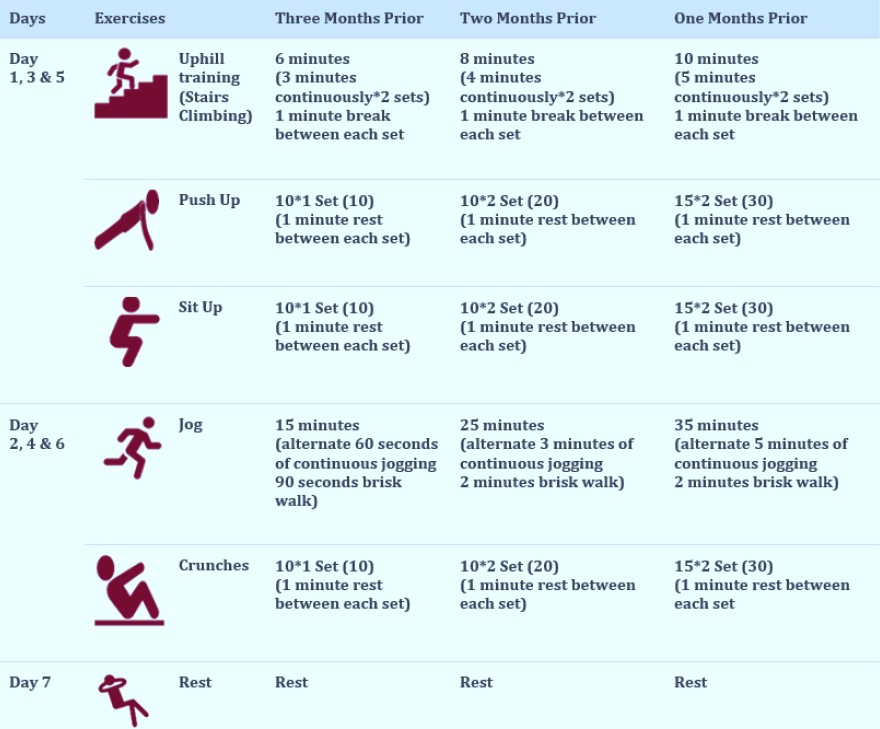
This is a comprehensive, progressive 12-week training plan to help you prepare for the physical demands of the Everest Base Camp trek. It combines cardiovascular endurance, strength training, and proper rest to build your fitness gradually and safely.
Weeks 1-4: Building the Foundation (3 Months Prior)
This phase focuses on establishing a consistent exercise routine and building your aerobic base.
Days 1, 3, & 5 (Strength Training):
Uphill Training (Stair Climbing): 6 minutes total. Do two sets of 3 minutes of continuous climbing, with a 1-minute break between sets.
Push-Ups: Complete one set of 10 repetitions.
Sit-Ups: Complete one set of 10 repetitions.
Days 2, 4, & 6 (Cardio):
Jogging: 15 minutes total. Alternate between 60 seconds of continuous jogging and 90 seconds of brisk walking.
Crunches: Complete one set of 10 repetitions.
Day 7 (Recovery): Complete rest. This day is crucial for muscle repair and preventing burnout.
Weeks 5-8: Increasing Intensity (2 Months Prior)
Now that you have a solid foundation, this phase increases the duration and repetitions to challenge your endurance and strength.
Days 1, 3, & 5 (Strength Training):
Uphill Training (Stair Climbing): 8 minutes total. Do two sets of 4 minutes of continuous climbing, with a 1-minute break between sets.
Push-Ups: Complete two sets of 10 repetitions each (20 reps total), with a 1-minute rest between sets.
Sit-Ups: Complete two sets of 10 repetitions each (20 reps total), with a 1-minute rest between sets.
Days 2, 4, & 6 (Cardio):
Jogging: 25 minutes total. Alternate between 3 minutes of continuous jogging and 2 minutes of brisk walking.
Crunches: Complete two sets of 10 repetitions each (20 reps total), with a 1-minute rest between sets.
Day 7 (Recovery): Complete rest.
Weeks 9-12: Peak Performance (1 Month Prior)
This final phase prepares your body for the long days of trekking with a significant increase in exercise volume and intensity.
Days 1, 3, & 5 (Strength Training):
Uphill Training (Stair Climbing): 10 minutes total. Do two sets of 5 minutes of continuous climbing, with a 1-minute break between sets.
Push-Ups: Complete two sets of 15 repetitions each (30 reps total), with a 1-minute rest between sets.
Sit-Ups: Complete two sets of 15 repetitions each (30 reps total), with a 1-minute rest between sets.
Days 2, 4, & 6 (Cardio):
Jogging: 35 minutes total. Alternate between 5 minutes of continuous jogging and 2 minutes of brisk walking.
Crunches: Complete two sets of 15 repetitions each (30 reps total), with a 1-minute rest between sets.
Day 7 (Recovery): Complete rest.
🏋️ Weekly Training Plan (8–12 Weeks Before Trek)
Day
Training Focus
Example
Monday
Run (5–7 km)
Steady pace
Tuesday
Strength Training
Squats, lunges, planks
Wednesday
Run/Brisk Walk (30–45 mins)
Hill runs/stair climbing
Thursday
Rest/Stretching
Yoga, flexibility
Friday
Strength + Cardio Mix
Circuit workout
Saturday
Long Trek/Run (2–3 hrs)
With backpack
Sunday
Rest
Full recovery
Why this plan works:
This training schedule is designed to mimic the demands of the Everest Base Camp trek. The progressive overload principle, where you gradually increase the intensity and duration of your workouts, is key to safely building the endurance you need. Uphill training strengthens the specific muscles used for trekking, while jogging improves your cardiovascular fitness for higher altitudes. The inclusion of strength training for your core and upper body will help with stability and carrying your daypack. Most importantly, structured rest days are built in to ensure your body recovers and adapts, preventing injury and fatigue.
FQAs
How difficult is the Everest Base Camp trek?
The trek is considered moderate to challenging. While it doesn’t require technical climbing skills, the high altitude, long daily distances, and uneven terrain make it physically and mentally demanding. The biggest challenge for most trekkers is the altitude, which can cause Acute Mountain Sickness (AMS).
The trek’s difficulty is directly related to its elevation profile and the daily trekking hours. The route involves a significant and sustained increase in altitude, from Lukla at ~2,860m to Everest Base Camp at 5,364m. This makes proper acclimatization and physical fitness critical to a successful journey. Reputable trekking companies like Super Trekkers structure their itineraries to include acclimatization days precisely because of this challenge.
When is the best time to trek to Everest Base Camp?
The ideal trekking seasons are pre-monsoon (March to May) and post-monsoon (late September to November). These periods offer the most stable weather, clear skies for panoramic mountain views, and moderate temperatures. The pre-monsoon season features blooming rhododendron forests, while the post-monsoon season is known for its pristine, crisp air following the rains. Trekking during the monsoon (June-August) or winter (December-February) is possible but comes with significant challenges like heavy rainfall, poor visibility, and extreme cold, respectively.
What kind of physical preparation is required?
You should focus on cardiovascular endurance and strength training for at least 3-4 months before the trek. The physical demands of the trek require a strong aerobic base to handle sustained walking at high altitudes. This is supported by the provided 12-week training schedule, which progressively builds jogging, stair climbing, and strength exercises. This type of regimen prepares your body to endure 6-8 hours of trekking per day, reducing the risk of exhaustion and injury.
How much does a guided Everest Base Camp trek cost?
The average cost for a guided trek with a reputable company typically ranges from $1,500 to $3,500 USD. The cost varies based on inclusions. This price range generally covers essential services such as flights to and from Lukla, trekking permits, accommodation in tea houses, meals, the services of a professional guide and porters, and sometimes even a sleeping bag and duffel bag. Opting for a guided service like Super Trekkers ensures these critical logistics are handled safely and ethically.
Is it safe to trek to Everest Base Camp?
The trek is safe when proper precautions are taken, especially regarding altitude sickness. The primary risk is not technical difficulty but rather the physiological effects of high altitude. The key to safety is slow and steady ascent, allowing the body to acclimatize. Professional guides are trained to monitor trekkers for symptoms of Acute Mountain Sickness (AMS) and can make crucial decisions, like initiating a descent, to prevent life-threatening conditions. The provided training plan and safety tips, such as staying hydrated and listening to your body, are all aimed at mitigating these risks, which is a standard safety protocol in high-altitude trekking.
What essential gear should I pack for the trek?
The most crucial items are properly broken-in hiking boots, a high-quality sleeping bag rated for at least -10°C, and a system of layering clothing to adapt to changing temperatures. A waterproof and windproof outer layer is also non-negotiable. The diverse weather conditions in the Himalayas, from warm lower elevations to freezing temperatures at night, necessitate a strategic layering system (base, mid, and outer layers). Furthermore, the long, multi-day nature of the trek and the risk of blisters highlight the importance of well-fitting, supportive footwear. A warm sleeping bag is essential for a good night’s sleep in unheated tea houses.
Is a guide necessary for the Everest Base Camp trek?
As of April 2023, the Nepalese government has made it mandatory to hire a licensed guide for all foreign trekkers in the Everest region. Trekking solo is no longer permitted. This policy change was implemented to enhance the safety of trekkers. A professional guide provides crucial support in navigation, communication with locals, and, most importantly, identifying and responding to symptoms of altitude sickness. Guides from companies like Super Trekkers are trained in high-altitude first aid and can make life-saving decisions.
How do you prevent altitude sickness on the trek?
The most effective way to prevent Acute Mountain Sickness (AMS) is by acclimatizing properly and staying well-hydrated. This involves ascending slowly, incorporating rest days into your itinerary, and following the “climb high, sleep low” principle. The EBC itinerary is specifically designed with acclimatization days in villages like Namche Bazaar and Dingboche. During these rest days, you hike to a higher elevation and then return to a lower altitude to sleep. This method, backed by mountain medicine, allows your body to produce more red blood cells and adapt to the thinner air, significantly reducing the risk of developing AMS.
What kind of food and water are available on the trail?
Tea houses along the trek offer a variety of meals, with the staple being dal bhat (lentil soup, rice, and vegetable curry). You will also find other options like noodles, pasta, and momos. For water, it is critical to only drink boiled or purified water. Food options become more limited and expensive as you ascend, as supplies must be carried up by yaks or porters. Dal bhat is a highly recommended dish as it is a complete, nutritious meal that is often served with unlimited refills. To avoid waterborne illnesses, it is advised to either purchase boiled water from tea houses or use water purification tablets, drops, or a filter for safety.
How much extra money should I budget for?
It’s wise to budget approximately $20 to $40 USD per day for personal expenses. This covers things like hot showers, device charging, Wi-Fi, and snacks. While a guided trek package from a company like Super Trekkers covers most major expenses, there are many optional costs. Services like hot showers, which are often just a bucket of hot water, can range from $5 to $10. Charging phones or power banks and using Wi-Fi are also a fee-based service, becoming more expensive as you gain altitude due to the remoteness of the location.
What is the acclimatization process?
Acclimatization is a gradual process where your body adapts to the lower oxygen levels at high altitude. It is achieved by spending dedicated “rest” days in specific locations on the trek, such as Namche Bazaar and Dingboche, and taking short hikes to higher elevations before returning to a lower sleeping altitude. This “climb high, sleep low” strategy is a time-tested physiological principle. By briefly exposing your body to a higher altitude during the day, you stimulate the production of red blood cells without putting the full strain on your system, preparing you for the next day’s ascent.
What are the toilet facilities like on the trek?
Toilet facilities are basic and vary from place to place. In lower villages, you may find Western-style toilets, but as you ascend, most are squat toilets with no flush. It is essential to carry your own toilet paper and hand sanitizer. The remote nature of the region means modern plumbing is non-existent at higher elevations. Trekkers are advised to be prepared for very basic facilities and to always prioritize personal hygiene to prevent the spread of germs and stomach illnesses, which are a common concern on any long-distance trek.
What is the maximum elevation you reach?
The highest point on the standard Everest Base Camp trek is Kala Patthar at 5,550 meters (18,209 ft). Everest Base Camp itself is at 5,364 meters (17,598 ft). While the goal is to reach Everest Base Camp, most trekkers also summit Kala Patthar the following morning. This vantage point offers the most spectacular panoramic sunrise views of Mount Everest, which is not fully visible from Base Camp itself. The trek to Kala Patthar is an optional but highly rewarding side trip.
Do I need to book my trek in advance?
It is highly recommended to book your trek well in advance, especially if you plan to travel during the peak seasons (March-May and September-November). Booking ahead, particularly with a reliable company, ensures you have all the necessary permits, confirmed flights to Lukla (which can be overbooked), and guaranteed accommodation. This pre-planning removes significant logistical stress and guarantees a smoother, safer experience.
What are the health risks besides altitude sickness?
Beyond AMS, common health risks include traveler’s diarrhea, colds or respiratory infections from the cold, dry air, and dehydration. The change in diet and water sources can lead to stomach issues, which is why it’s critical to be cautious about what you eat and drink. The high-altitude environment is also very dry, increasing the risk of dehydration and throat infections. The best prevention is to follow good hygiene practices, stay hydrated, and carry a basic medical kit with essential medications.
Really well-written article! 👏 I enjoyed the way you broke down the topic—it feels very genuine and helpful, not just theory. The practical tips make it easy for readers like me to connect and actually take something useful away.
Keep up the great work—I’ll definitely be following along for more insights! 🚀





Really well-written article! 👏 I enjoyed the way you broke down the topic—it feels very genuine and helpful, not just theory. The practical tips make it easy for readers like me to connect and actually take something useful away.
Keep up the great work—I’ll definitely be following along for more insights! 🚀