The Khopra Ridge Trek is one of Nepal’s most underrated and rewarding trekking experiences. Tucked away in the Annapurna region, the Khopra Ridge Trek in Nepal offers dramatic Himalayan panoramas, peaceful trails, authentic villages, and a rare chance to walk along a high mountain ridge far away from crowded routes.
If you are wondering where is Khopra Ridge, how difficult the trek is, what the Khopra Ridge trek distance, Khopra Ridge trek elevation, and best time to visit Khopra Ridge Trek are — this complete guide answers everything.
Overview of Khopra Ridge Trek Nepal
The Khopra Ridge Trek Nepal (also known as Khopra Danda Trek) is a community-managed trekking route located north of Ghorepani in the Annapurna region. Unlike the popular Poon Hill trek, this trail remains quiet, raw, and deeply immersive.
Why Khopra Ridge Trek is special:
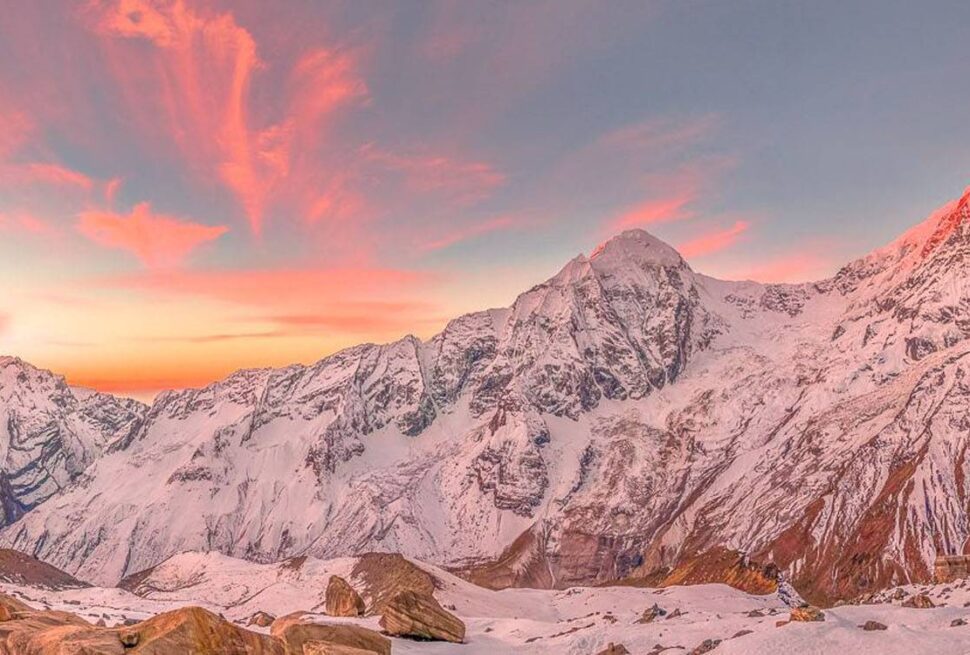
- Panoramic views of Dhaulagiri (8,167m), Annapurna South, Nilgiri, and Machhapuchhre
- Walk along a high Himalayan ridge
- Stay in community lodges supporting local villages
- Perfect for trekkers seeking off-beat Nepal treks
Where Is Khopra Ridge Located?
Khopra Ridge is located in Nepal’s Annapurna region, between the Kali Gandaki valley and Annapurna Sanctuary. It lies above the villages of Swanta and Chistibung, north of Ghorepani.
- Country: Nepal
- Region: Annapurna Conservation Area (ACA)
- Nearest town: Pokhara
- Local name: Khopra Danda
When trekkers ask where is Khopra Ridge, the simplest answer is:
Khopra Ridge sits high above the traditional Gurung villages, offering one of the best ridge walks in Nepal.
Why Choose the Khopra Ridge Trek?
While iconic routes like the Annapurna Base Camp (ABC) are famous, the Khopra Ridge (also known as Khopra Danda) offers a rarer, more profound experience. It’s the ‘secret balcony’ of the Himalayas, presenting some of the most spectacular, unobstructed panoramic mountain views you will ever witness. Imagine gazing upon Dhaulagiri, Annapurna South, Machhapuchhre (Fishtail), and Hiunchuli, all from a single, elevated vantage point.
What makes it unique?
- Ridge walking: The name says it — you spend significant time on a long ridge (Khopra Ridge) that offers uninterrupted mountain panoramas.
- Lake side-trip: The optional detour to Khayer Lake adds a high-altitude glacial element.
- Off-the-beaten path: Fewer crowds than the popular treks in the region, giving a more intimate experience.
- Culture & community lodges: The trail passes remote villages and incorporates community-run teahouses that support local upkeep.
With that overview in mind, let’s look at how you actually do this trek.


Where is it located?
The Khopra Ridge Trek is located in the Annapurna region of Nepal, nestled within the Myagdi district. Geographically, it branches off the main Annapurna trail network. The trek typically begins after a drive from Pokhara, usually at a point like Ghandruk or Nayapul, depending on the chosen route. It remains a more secluded trail, largely thanks to its community-managed eco-lodges, which offer a sustainable and authentic trekking experience distinct from the busier trails. The closest major city and transit hub is Pokhara.
What is the Khopra Ridge Trek Distance and Duration?
The Khopra Ridge Trek distance varies significantly depending on the starting and ending points and whether you combine it with other sections (like Poon Hill).
Duration: The most common and recommended itinerary is 7 to 10 days from Pokhara to Pokhara. This duration allows for proper acclimatization, a side trip to the holy K’aire Lake, and a comfortable daily walking pace.
Standard Route Distance: Approximately 60–80 kilometers (37–50 miles) round trip from the road-head (e.g., Sinuwa/Ghandruk loop).
Schedule a FREE Guidance Call with Super Trekkers today!
What is the standard route?
A popular route begins in Nayapul (or a nearby trailhead after a drive from Pokhara) and goes through Ghorepani → Tadapani → Dobato → Chhistibang → Khopra Ridge (Danda). From Khopra Ridge you can either return via the same trail or include the Khayer Lake side-trip, then continue down to Paudwar or similar village and drive back to Pokhara.
Khopra Ridge Trek Itinerary
- Day 01: Arrival in Pokhara Highlights: Arrive in Pokhara, the gateway to the Annapurna region. Trek briefing and permit verification with your guide. Explore Phewa Lake and Lakeside in the evening. Stay: Hotel/Guesthouse in Pokhara.
- Day 02: Drive from Pokhara to Klue & Trek to Ghandruk Drive: ~2–3 hours. Trek Distance: ~5 km | 3–4 hours. Altitude: 1,940 m (Ghandruk). Highlights: Scenic drive to Klue trailhead, then a gentle uphill trek to the charming Gurung village of Ghandruk with close-up views of Annapurna South and Machhapuchhre. Stay: Teahouse in Ghandruk.
- Day 03: Trek from Ghandruk to Tadapani Trek Distance: ~10 km | 5–6 hours. Altitude: 2,630 m (Tadapani). Highlights: Trek through dense rhododendron and oak forests with occasional glimpses of Annapurna South and Fishtail. Tadapani offers a spectacular sunset over the Annapurna range. Stay: Teahouse in Tadapani.
- Day 04: Trek from Tadapani to Dobato Trek Distance: ~8 km | 4–5 hours. Altitude: 3,420 m (Dobato). Highlights: A steady climb through forests to the small settlement of Dobato. The trail is less crowded, offering a peaceful Himalayan experience with views of the Annapurna and Dhaulagiri ranges. Stay: Community lodge in Dobato.
- Day 05: Trek from Dobato to Chhistibang via Muldai Top Trek Distance: ~10 km | 6–7 hours. Altitude: 3,640 m (Muldai Top) / 3,100 m (Chhistibang). Highlights: Early morning climb to Muldai Top (3,640 m) for a stunning 360° sunrise over Dhaulagiri and Annapurna South. Descend through rhododendron forests to Chhistibang. Stay: Community lodge in Chhistibang.
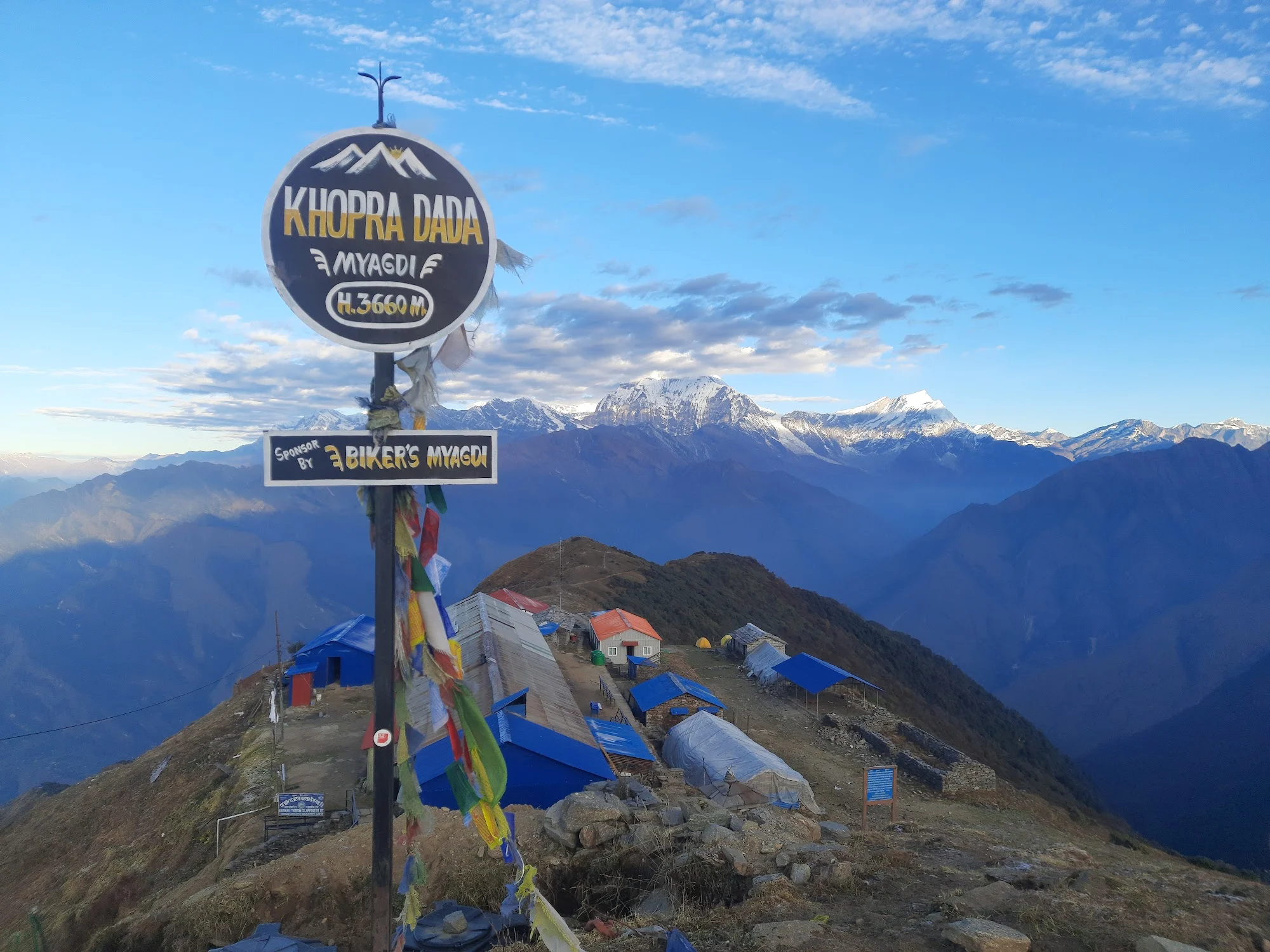
- Day 06: Trek from Chhistibang to Khopra Ridge Trek Distance: ~6 km | 4–5 hours. Altitude: 3,660 m (Khopra Danda). Highlights: The most anticipated day — climb to Khopra Ridge, the heart of the trek. Arrive at the community lodge and soak in the iconic 360° views of Dhaulagiri, Annapurna South, Nilgiri, Hiunchuli, and Machhapuchhre. Evening sunset from the ridge. Stay: Community lodge at Khopra Ridge.
- Day 07: Trek from Khopra Ridge to Khayer Lake & Return Trek Distance: ~12 km | 7–8 hours. Altitude: 4,660 m (Khayer Lake). Highlights: Optional high-altitude side-trip to the sacred Khayer Lake (4,660 m) for a challenging but rewarding day. Witness pristine alpine scenery and spiritual significance. Return to Khopra Ridge for the night. Stay: Community lodge at Khopra Ridge.
- Day 08: Trek from Khopra Ridge to Paudwar via Gorge Point Trek Distance: ~13 km | 6–7 hours. Altitude: 1,950 m (Paudwar). Highlights: Descend through forests and terraced fields to the village of Paudwar. Pass the scenic Gorge Point along the way. Experience authentic village life and Magar culture. Stay: Community lodge/homestay in Paudwar.
- Day 09: Trek from Paudwar to Tatopani & Drive to Pokhara Trek Distance: ~5 km | 2–3 hours. Drive: ~4–5 hours. Highlights: A short trek to the hot springs of Tatopani, where you can soak your tired muscles before a scenic drive back to Pokhara. Tour concludes in Pokhara.
Note: Timings and distances are approximate. Weather conditions in the Annapurna region may require minor adjustments to the daily schedule for safety. The Khayer Lake side-trip on Day 07 is optional and weather-dependent — your guide will assess conditions and confirm the final plan.
What is the Khopra Ridge Trek Best Time to Visit?
Choosing the Khopra Ridge Trek best time to visit is crucial for maximizing views and ensuring comfortable trekking conditions.
- Autumn (September to Mid-December): The absolute best time. Stable weather, crystal-clear skies, moderate temperatures, and dry trails. The post-monsoon clarity offers the most spectacular mountain views.
- Spring (March to May): Excellent. Warmer temperatures, rhododendron forests in full bloom, adding vibrant color to the landscape. Clear views are common, though haze can sometimes appear in lower elevations by late May.
- Winter (Late December to February): Possible but challenging. Trails are often very cold, and heavy snowfall can block the ridge and K’aire Lake, making the trek riskier and more difficult.
- Monsoon (June to August): Not recommended. Heavy rain, high humidity, leech activity, and clouds often obscure mountain views.
Planning Tips: How to Prepare for Your Khopra Ridge Trek
A successful trek starts long before you take your first step on the trail. Here is the critical, actionable advice you need for the Khopra Ridge Trek.
Required Permits and Logistics
Nepal mandates permits to enter the protected areas. You will need two main permits:
- ACAP Permit: The Annapurna Conservation Area Project (ACAP) Permit. This is the entry fee for the conservation area.
- TIMS Card: The Trekkers’ Information Management System (TIMS) Card. This helps track trekkers for safety and security.
- Acquisition: Both permits must be obtained in Kathmandu or Pokhara.
- Cost: Costs are nominal, usually less than $50 USD combined.
- Documentation: You will need your passport, four passport-sized photos, and local currency (Nepali Rupees) for payment.
Super Trekkers Solution: When you book with us, we manage all permit applications, fees, and documentation, ensuring a smooth, bureaucracy-free start to your trek.
Health and Acclimatization Advice
While the Khopra Ridge Trek elevation is moderate, the side trip to 4,500m demands respect.
- Hydration: Drink 3-4 liters of water daily. Dehydration exacerbates AMS symptoms.
- Pacing: Follow the mantra “Slowly and steadily.” Never rush, especially on ascents.
- Listen to Your Body: Mild headaches are common; severe symptoms (persistent vomiting, loss of coordination) mean you must descend immediately.
- Altitude Rule: Our itinerary adheres to the “Climb High, Sleep Low” principle, ensuring a safe ascent profile.
Why Khopra Ridge Trek Nepal Should Be Your Next Adventure
The Khopra Ridge Trek is more than just a trail — it is a journey through untouched Himalayan beauty, community spirit, and breathtaking ridgeline views. From understanding where Khopra Ridge is, to walking the iconic Khopra Danda, to experiencing the true Annapurna wilderness, this trek delivers an unforgettable experience.
If you’re looking for a less crowded, deeply rewarding trek in Nepal, the Khopra Ridge Trek Nepal deserves a top spot on your bucket list.
How to Reach for Khopra Ridge
For the Khopra Ridge Trek, you need to first reach Pokhara, which is the main gateway city for the Annapurna region
- From Kathmandu:
- From India :
- Road from India (via Sunauli): Travelers commonly enter Nepal through the Sunauli border near Gorakhpur and then take a tourist bus or private car to Pokhara, which usually takes about 7–8 hours.
- Air from India (via Kathmandu): Fly to Kathmandu, which is well connected to major Indian cities such as Delhi, Mumbai, Kolkata, and Bangalore with direct or connecting flights; from Kathmandu, take a 25–30 minute domestic flight or a 6–8 hour tourist bus to Pokhara.
Khopra Ridge vs Poon Hill vs Annapurna Base Camp
Three classic Annapurna treks, three very different experiences. Compare difficulty, altitude, crowds, facilities and cost side by side, then use the picker to find the one that fits your fitness and the days you have.
Highest point at a glance
Side-by-side comparison
| Khopra Ridge Trek9 days from Pokhara | Ghorepani Poon Hill Trek6 days | Short Annapurna Base Camp Trek8 days | |
|---|---|---|---|
| Our grade | Moderate | Easy | Moderate |
| Highest point | 3,660 m at Khopra Ridge; 4,660 m at Khayer Lake (day hike) | About 3,210 m at Poon Hill | 4,130 m at Annapurna Base Camp |
| Highest night | 3,660 m (Khopra Ridge) | About 2,860 m (Ghorepani) | 4,130 m (Base Camp) |
| Altitude sickness risk | Moderate: first night above 3,000 m on Day 4, plus a 1,000 m climb on the Khayer Lake day | Low | Moderate to high: you sleep at 4,130 m |
| Crowds | Low: a quiet trail with far fewer trekkers | High: the busiest short trek in the region | High in October–November and March–April |
| Lodges and facilities | Basic community lodges and a homestay, with shared bathrooms and simple menus | Well-developed teahouses | Teahouses, getting simpler near the top |
| Main views | Dhaulagiri, Annapurna South, Nilgiri, Hiunchuli and Machhapuchhre, from a ridge you sleep on | Sunrise over the Dhaulagiri and Annapurna ranges from Poon Hill | A 360° amphitheatre of peaks inside the Annapurna Sanctuary |
| Best seasons | March–May, September–November | March–May, September–November (also done in winter) | March–May, September–November |
| Price from* | ₹39,900 | ₹34,900 | ₹34,900 |
| Best for | Fit trekkers who want a quiet ridge and have 9 days | First Himalayan trek or a short break | Trekkers who want to reach a Himalayan base camp |
*Prices are those listed on our trek pages in November 2026 and change by batch, so check the live price on each page. We compare Annapurna Base Camp here using our 8-day short itinerary; our 13-day Annapurna Base Camp trek via Poon Hill is graded Hard.
Which trek should you choose?
Choose Khopra Ridge if…
- You want a quiet trail instead of a crowded one.
- You have 9 days and are fit enough for 6–9 hour days.
- You like the idea of sleeping on a ridge with Dhaulagiri in view.
- You are happy with basic community lodges.
Choose Poon Hill if…
- It is your first Himalayan trek.
- You have only 5–6 days.
- You prefer an easier grade and more comfortable teahouses.
- Sunrise from a viewpoint is the goal.
Choose Annapurna Base Camp if…
- You want to stand inside the Annapurna Sanctuary.
- You have 8 or more days and good fitness.
- You are comfortable sleeping at 4,130 m.
- You accept busier trails in peak season.
Find your trek in 3 clicks
Not sure which one suits you?
Tell us your dates, group size and fitness and we will suggest the right trek, or customise one for you.
View the Khopra Ridge Trek Ask us on WhatsAppKhopra Ridge Trek FAQs: Cost, Difficulty, Best Time, Permits & More
Answers to the questions trekkers ask most about the Khopra Ridge Trek (Khopra Danda) in Nepal’s Annapurna region: the route, distance, altitude, Khayer Lake, permits, costs for Indian travellers, food, packing and how it compares with Poon Hill and Annapurna Base Camp.
Updated November 2026
Route, itinerary & distance
What is the Khopra Ridge Trek and where is Khopra Ridge located?
The Khopra Ridge Trek (also called the Khopra Danda Trek) is a quiet Himalayan trail in the Annapurna Conservation Area of western Nepal, in the Myagdi district. Khopra Ridge itself is a high grassy ridge at about 3,660 m (12,008 ft), reached by road from Pokhara and then on foot through Gurung villages and rhododendron forest.
Khopra Ridge and Khopra Danda are the same place. The ridge is known for 360° views of Dhaulagiri, Annapurna South, Nilgiri, Hiunchuli and Machhapuchhre (Fishtail), and for community-run lodges that keep the trail far less crowded than Poon Hill or Annapurna Base Camp.
What is the day-by-day Khopra Ridge Trek itinerary?
Our 9-day itinerary from Pokhara is:
- Day 1: Arrive in Pokhara (825 m) and attend the trek briefing.
- Day 2: Drive 48 km (~2 hrs) to Klue (1,800 m), then trek 7 km (4–5 hrs) to Ghandruk (2,000 m).
- Day 3: Ghandruk to Tadapani (2,650 m), 6–7 km, 4–5 hrs.
- Day 4: Tadapani to Dobato (3,430 m), 6 km, ~6 hrs.
- Day 5: Dobato to Chhistibang (3,020 m) via Muldai Top (3,630 m), 9 km, 6–7 hrs.
- Day 6: Chhistibang to Khopra Ridge (3,660 m), 4 km, ~3 hrs.
- Day 7: Khopra Ridge to Khayer Lake (4,660 m) and back, 16 km, 8–9 hrs.
- Day 8: Khopra Ridge to Paudwar (2,010 m) via Gorge Point, 8–9 km, 6–7 hrs.
- Day 9: Paudwar to Tatopani (1,200 m), 5 km, ~3 hrs, then drive 110 km (~5 hrs) to Pokhara.
See the full inclusions and dates on the 9-day Khopra Ridge Trek package page.
How long is the Khopra Ridge Trek in km and miles?
Adding up the daily stages of our 9-day itinerary gives about 62 km (roughly 38 miles) of walking. Of that, 16 km is the Khayer Lake day hike, so the main route without Khayer Lake is about 46 km (roughly 29 miles). Road transfers (Pokhara to Klue and Tatopani to Pokhara) are extra.
Distances vary between operators because routes differ: some start at Nayapul or Ghorepani, add Poon Hill, or skip Khayer Lake. Compare the start point, the route and the number of days before comparing distances.
How many days are needed for the Khopra Ridge Trek?
Itineraries online range from about 6 to 14 days. Ours is 9 days from Pokhara to Pokhara (8 days of travel and trekking after arrival). That pace gives a gradual climb, a rest on the ridge, and time for the Khayer Lake day hike without rushing.
Shorter versions cut the Khayer Lake day or use faster ascents. Longer ones add Poon Hill or extra buffer days. If you want a custom plan, message us on WhatsApp.
What is Khayer Lake, and is the side trip worth it?
Khayer Lake (also spelled Khayar or K’aire) is a sacred high-altitude lake at about 4,660 m (15,300 ft), below Annapurna South. It is the highest point of the trek.
The trip is a demanding day hike from Khopra Ridge: 16 km round trip, 8–9 hours and roughly 1,000 m of climbing, then back to Khopra Ridge for the night. It is optional. Your trek leader decides on the day based on weather, snow and how the group feels. In early spring, snow can cover the trail and the lake. If you are unwell, resting on the ridge is the right call.
Which mountains can I see from Khopra Ridge?
From Khopra Ridge you get close views of Dhaulagiri (8,167 m), Annapurna South, Nilgiri, Hiunchuli and Machhapuchhre (Fishtail). Muldai Top (3,630 m) on Day 5 is another strong viewpoint.
Because you sleep on the ridge, you can watch sunset and sunrise light on the snow peaks instead of passing through for a quick photo. Clear mornings are most likely in October–November and in March–April.
Difficulty, altitude & fitness
How difficult is the Khopra Ridge Trek?
Our grade is moderate. Walking days run from 4 to 16 km and from about 3 to 9 hours, on well-defined trails with steady climbs and some steep sections. You carry a daypack only if you use a porter.
The three hardest days are:
- Day 4: a steady climb of about 780 m to Dobato (3,430 m).
- Day 5: a 9 km ridge walk with steep ascents over Muldai Top.
- Day 7: the Khayer Lake day hike (16 km, 8–9 hrs, ~1,000 m climb).
Is the Khopra Ridge Trek suitable for beginners?
Yes, for fit beginners. You do not need technical skills, but you do need stamina and some multi-day hiking experience. It is a tougher first Himalayan trek than Poon Hill because of the longer days and the first nights above 3,000 m.
If you have never trekked above 3,000 m, train for 6–8 weeks first and tell your trek leader so they can pace the group accordingly.
What is the maximum altitude of the Khopra Ridge Trek?
The highest place you sleep is Khopra Ridge at 3,660 m (12,008 ft). The highest point of the trek is Khayer Lake at about 4,660 m (15,300 ft), reached as a day hike from the ridge.
For comparison, Poon Hill is about 3,200 m and Annapurna Base Camp is about 4,130 m.
Is altitude sickness a risk on the Khopra Ridge Trek?
Yes, from Day 4 onwards. That is the first night above 3,000 m: you climb about 780 m from Tadapani (2,650 m) to sleep at Dobato (3,430 m). The itinerary has no dedicated rest day, so pace and hydration matter.
- Climb slowly, drink plenty of water and do not skip meals.
- Day 5 helps: you cross Muldai Top (3,630 m) but sleep lower, at Chhistibang (3,020 m).
- On Day 7 you climb to 4,660 m and return to sleep at 3,660 m (climb high, sleep low).
- Tell your guide at once if you have a headache, nausea, dizziness or unusual tiredness. Do not climb higher with worsening symptoms, and descend if they do not ease.
- Take Diamox or any altitude medication only after speaking to your doctor.
How should I train for the Khopra Ridge Trek?
Start 6–8 weeks before departure. Aim for 3–4 cardio sessions a week (brisk walking, running, cycling or stairs), plus squats, lunges and core work twice a week.
Add a weekend hike with a 6–8 kg backpack every week or two, building to 4–6 hours on hilly ground. If you live near Pune or Mumbai, Sahyadri hikes are good practice. You should be able to walk 6–8 km uphill comfortably before you book.
Best time, weather & seasons
What is the best time to do the Khopra Ridge Trek?
The two seasons are March–May (spring) and September–November (autumn).
- October–November: clearest skies and the most stable weather, with cold nights on the ridge.
- March–April: warmer days, rhododendron forests in bloom on the lower sections, and good mountain views.
- May: warm but often hazy, with pre-monsoon showers possible.
Check live departures for spring 2027 on the trek page.
How cold does it get on Khopra Ridge?
Nights at Khopra Ridge (3,660 m) are cold in every season, often near or below freezing, especially in November and March. Days are pleasant in the sun but turn cold quickly when clouds roll in. The Khayer Lake day is colder and windier still.
Pack a proper layering system, a warm sleeping bag or liner and insulated gloves and hat. See the packing question below.
Can I trek Khopra Ridge in the monsoon (June to August)?
It is not recommended. Heavy rain, leeches in the lower forests, cloud that hides the mountains and landslides on the access roads make the trek unpleasant and less safe. Choose spring or autumn instead.
Can I do the Khopra Ridge Trek in winter?
We do not recommend it for most trekkers. From December to February the upper trail can be covered in snow and ice, nights are very cold, some community lodges may close and the Khayer Lake route is often not practical.
Cost, inclusions & booking
How much does the Khopra Ridge Trek cost?
Our 9-day Khopra Ridge Trek from Pokhara is currently ₹39,900 per adult (discounted from ₹45,500). Prices and discounts change by batch, so check the live price and dates on the Khopra Ridge Trek page.
Going independently can look cheaper on paper, but you must add the road transfers to Klue and back from Tatopani, permits, a guide or porter if you hire one, and all meals and lodging. Compare line by line.
What is included and not included in the Khopra Ridge Trek package?
Included:
- Breakfast, lunch, dinner and tea or coffee during the trek.
- Twin-sharing lodge or homestay accommodation on the trek.
- Government-licensed trekking guide.
- Annapurna Conservation Area permit and TIMS card fees.
- Road transfers as per the itinerary, a medical kit and a trek certificate.
Not included: international and domestic flights, Kathmandu hotel and meals, meals in Pokhara, personal gear, drinks, laundry, phone and Wi-Fi, travel and medical insurance, helicopter rescue, tips, extra nights, and the Nepal visa fee for nationalities that need a visa.
Porter options and the Pokhara hotel night are shown on the booking page when you choose your package, so check them there before you pay.
I am travelling from India. What do I need for the Khopra Ridge Trek?
- Visa: Indian citizens do not need a visa for Nepal.
- ID: carry a valid passport or Election (Voter) ID. Aadhaar alone is generally not accepted for entry by air, so check the current requirements before you travel.
- Money: Indian notes above ₹100 are not accepted in Nepal. Carry Nepali rupees for the trek.
- Getting to Pokhara: most trekkers fly to Kathmandu, then take a short domestic flight or a 6–8 hour road journey to Pokhara. You can also travel overland via the Sunauli border.
- Documents: bring passport-size photos and ID copies for permits.
What is the cancellation and refund policy for the Khopra Ridge Trek?
In short: 25+ days before the trek, 5% deduction, or a 100% voucher valid for a year, or transfer to a friend. 24–15 days: 30% deduction or voucher options. 14–10 days: 50% deduction, a voucher or a batch change. Less than 9 days: no cash refund. Rescheduling for the same trek carries a 30% fee.
Read the full terms on our Terms and Conditions page before you book.
Will I find ATMs on the trail?
Do not count on ATMs once you leave Pokhara. Carry enough Nepali rupees for drinks, extra snacks, showers, charging, tips and personal expenses, and keep a small reserve in case of delays.
Do I need travel insurance, and is helicopter rescue covered?
Insurance is not included in our package, and helicopter rescue is an extra cost paid directly if it is needed. Buy a policy that covers trekking up to at least 5,000 m, including emergency evacuation and medical care.
Permits, guides & rules
Which permits do I need for the Khopra Ridge Trek?
Khopra Ridge lies inside the Annapurna Conservation Area, so you need an ACAP permit. A TIMS card has also been required in recent years, but requirements and fees for TIMS and local entry fees have changed several times, so confirm the current rules with the Nepal Tourism Board, the ACAP office or your operator before you travel.
In our package, permit fees are included and we arrange them for you. Permits are issued in Kathmandu or Pokhara, so bring your passport or ID and passport-size photos.
Can I do the Khopra Ridge Trek independently, and do I need a guide?
Rules for independent trekkers and mandatory guides in Nepal have been tightened and enforced unevenly in recent years. Check the latest requirement with the Nepal Tourism Board or the ACAP office before going without a guide.
Even if it is allowed, we strongly recommend a licensed local guide. The upper section has few other trekkers, lodges are community-run and basic, signal is patchy, and a guide helps with pacing, altitude decisions, lodge bookings and emergencies.
Accommodation, food & safety
What accommodation is available on the Khopra Ridge Trek?
You stay in teahouses and community-run lodges at Ghandruk, Tadapani, Dobato, Chhistibang and Khopra Ridge, and in a local homestay at Paudwar. They are basic twin-sharing rooms with shared bathrooms. Hot showers, where available, are usually paid, and blankets are provided but nights are cold.
The lodges are smaller and simpler than on the main Annapurna routes, which is part of the appeal. Booking ahead matters in peak months.
What is the food like on the Khopra Ridge Trek?
Simple, filling Nepali meals: dal bhat, noodles, soups, potatoes, eggs, momos and porridge. Menus are shorter than on busier routes. Vegetarian food is easy to find, and meat is limited and best avoided at altitude. Tell us your dietary needs when you book.
Drink boiled or treated water. Buy boiled water at lodges, or carry purification tablets or a filter bottle.
Is there mobile network, Wi-Fi and electricity on the trek?
Signal is patchy and often absent on the ridge. Some lodges sell Wi-Fi and phone charging, usually via solar power, at extra cost. Carry a 10,000–20,000 mAh power bank and keep your phone in airplane mode to save battery. Check roaming with your operator, or buy a Nepali SIM in Pokhara or Kathmandu.
Is the Khopra Ridge Trek safe for solo travellers and women?
It is generally a safe trek for solo travellers and women when done with a licensed guide and a small group, which is how our departures run. Community lodges are welcoming and the trail is quiet. Use normal precautions, stay with your group and share your plans with someone at home.
Packing list
What should I pack for the Khopra Ridge Trek?
- Bags: 50–60 L trekking backpack with rain cover, 20–30 L daypack, trekking poles.
- Layers: 2–3 thermal tops and bottoms, a fleece, a down or padded jacket, a waterproof and windproof shell, rain pants, 2–3 quick-dry shirts, 2 trekking pants.
- Head and hands: woollen cap, sun hat, buff, UV sunglasses, inner and waterproof outer gloves.
- Footwear: broken-in waterproof boots, camp shoes, 4–5 pairs of trekking socks and one thermal pair.
- Sleep: a sleeping bag rated to about –10°C, or at least a sleeping liner. Lodges give blankets, but nights on the ridge are cold.
- Health and extras: sunscreen SPF 50+, lip balm, personal first-aid kit, water purification tablets or filter, headlamp with spare batteries, power bank, reusable 1 L bottle, snacks.
- Documents: passport or ID, permit copies, insurance papers, passport photos, Nepali rupees.
Khopra Ridge vs other Annapurna treks
Is the Khopra Ridge Trek harder than Poon Hill or Annapurna Base Camp?
It is harder than Poon Hill and roughly comparable to Annapurna Base Camp. Compared with Poon Hill, it is longer and higher, has steeper ascents and has far fewer facilities. With the Khayer Lake day hike, it reaches a higher point than ABC.
| Trek | Our itinerary | Highest point | Crowds | Best for |
|---|---|---|---|---|
| Khopra Ridge | 9 days | 3,660 m (4,660 m with Khayer Lake) | Low | Quiet ridge stay, Dhaulagiri views |
| Ghorepani Poon Hill | 6 days | about 3,200 m | High | A short, first Himalayan trek |
| Short Annapurna Base Camp | 8 days | about 4,130 m | High | The Annapurna Sanctuary |
| Mardi Himal | 7 days | about 4,500 m | Medium to high | Close Machhapuchhre ridge views |
Is the Khopra Ridge Trek crowded?
No. It sees far fewer trekkers than Poon Hill, Annapurna Base Camp or Mardi Himal, and the ridge itself is peaceful. Lodges at the higher camps are small, so book early and travel in a small group during October–November and April.
Can I add Poon Hill or customise the Khopra Ridge itinerary?
Many Khopra itineraries pass through Ghorepani and Poon Hill. Our 9-day plan goes via Klue, Ghandruk and Tadapani instead. Customised itineraries, such as adding Poon Hill, extra rest days or private departures, are possible. Message us on WhatsApp with your dates and group size.
Ready to trek Khopra Ridge?
Join a small-group departure with a licensed guide, check live dates and prices, or ask us to customise the route.
View the 9-day Khopra Ridge Trek package Ask a question on WhatsApp