Annapurna Base Camp Trek vs Everest Base Camp Trek – Discover the key differences in duration, difficulty, cost, culture, scenery, and safety for your ideal Nepal trek.
When it comes to legendary trekking adventures, Annapurna Base Camp (ABC) Trek and Everest Base Camp (EBC) Trek rank among the world’s most sought-after journeys. Each trek presents a unique blend of awe-inspiring landscapes, cultural interactions, and adrenaline-fueled challenges, drawing trekkers from every corner of the globe.
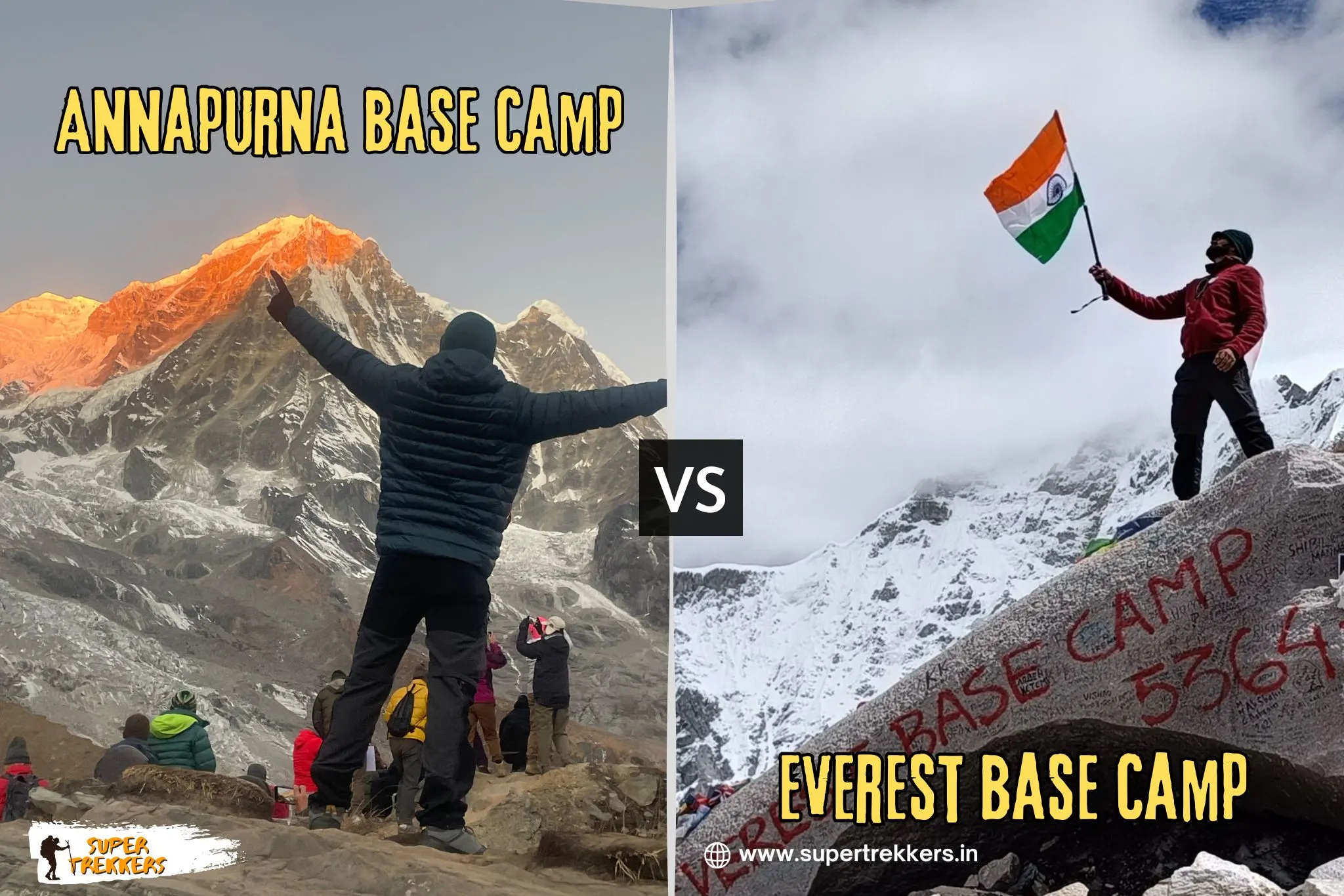
Standing at the base of a Himalayan giant is a life-changing experience — but should you choose the Annapurna Base Camp Trek or the Everest Base Camp Trek? Both are iconic Nepal treks, yet they offer completely different adventures.
Annapurna Base Camp (ABC) is shorter, more moderate, and takes you through lush valleys, rhododendron forests, and traditional Gurung villages before opening up to the jaw-dropping amphitheatre of Annapurna Sanctuary.
Everest Base Camp (EBC) is higher, tougher, and delivers the thrill of walking in the footsteps of legendary mountaineers, surrounded by towering peaks like Lhotse, Nuptse, and, of course, Mount Everest.
If you want lush greenery, cultural immersion, and a moderate challenge, ABC might be perfect. If you dream of extreme altitude, Sherpa culture, and ultimate bragging rights, EBC calls your name.
🎯 Plan your dream trek with Super Trekkers – Book Your Free Guidance Call today!
Schedule a FREE Guidance Call with Super Trekkers today!
TREK OVERVIEW
| Feature | Annapurna Base Camp (ABC) | Everest Base Camp (EBC) |
|---|---|---|
| Location | Annapurna Conservation Area, Nepal | Sagarmatha National Park, Nepal |
| Altitude | Base Camp: 4,130m | Base Camp: 5,364m |
| Difficulty | Moderate | Moderate to Challenging |
| Duration | 7–12 days (standard), extensions possible | 12–16 days (standard w/ acclimatization) |
| Best Season | Mar-May, Sep-Nov | Mar-May, Sep-Nov |
| Permits | TIMS, ACAP | TIMS, Sagarmatha NP |
| Main Peaks | Annapurna I, Machapuchhre, Hiunchuli | Everest, Lhotse, Nuptse, Pumori |
| Landscape | Lush forests, terraced fields, rivers | Rocky trails, glacial valleys |
| Culture | Gurung, Magar villages | Sherpa villages, Buddhist sites |
| Accommodations | Quality tea houses | Tea houses (basic, higher up) |
| Risk/Altitude Sickness | Low-moderate, easier acclimatization | High-moderate, careful acclimatization |
| Crowds | Moderate, less commercialized | High, especially peak season |
| Cost Range | ₹55,000–₹75,000 | ₹80,000–₹1,25,000 |
WHY CHOOSE THESE TREKS ?

Annapurna Base Camp – The Heart of the Annapurna Sanctuary
ABC offers a compact Himalayan experience that’s perfect for trekkers with limited time or moderate fitness. The route blends rural charm with alpine grandeur — rice terraces, rhododendron forests, hot springs, and the high glacial basin of the Annapurna Sanctuary.
Why it’s special:
- Diverse landscapes in a short distance
- Lower altitude = reduced AMS risk
- Cultural immersion in Gurung & Magar villages
- Shorter, flexible itineraries
Everest Base Camp – Following the Path of Legends
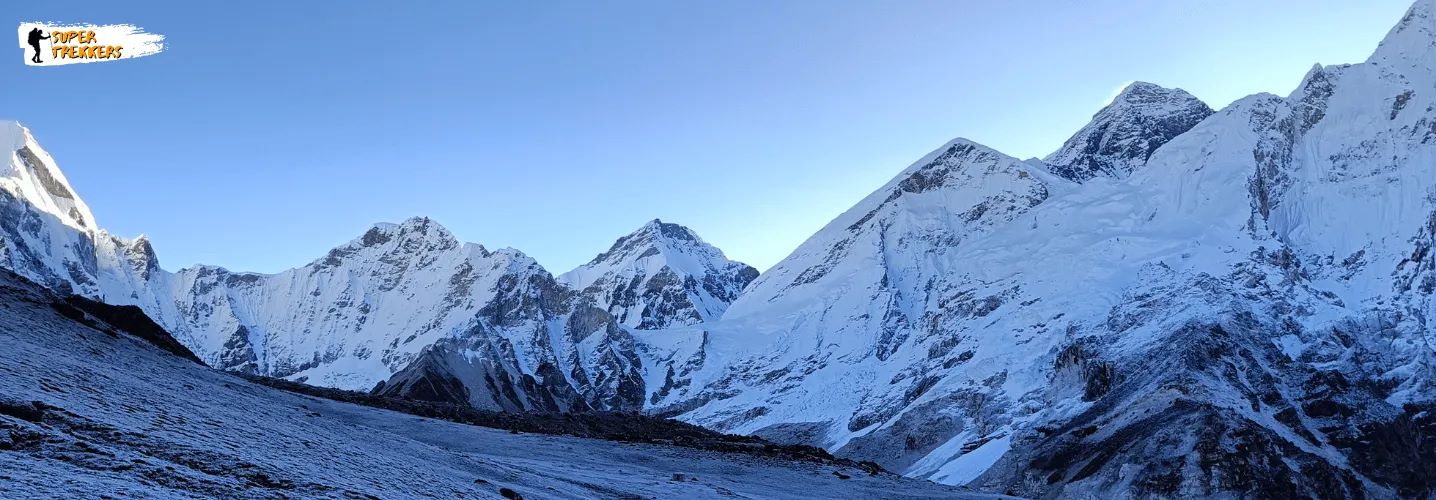
EBC is a high-altitude challenge that rewards trekkers with iconic views and mountaineering history. Flying into Lukla sets the stage for an epic journey past monasteries, suspension bridges, and world-famous peaks.
Why it’s special:
- Stand at the base of the world’s highest mountain
- Immersive Sherpa culture & Buddhist heritage
- Kala Patthar sunrise views over Everest
- A sense of achievement matched by few treks
BEST SEASON FOR TREKKING
The best time to undertake both treks is during the same two periods, but with some minor differences.
- EBC & ABC: The peak seasons are Spring (March-May) and Autumn (September-November).
- Spring: This is a popular time due to stable weather, warmer temperatures, and blooming rhododendron forests in the lower Annapurna regions. At EBC, this is also when you’ll see climbing expeditions preparing for their summit attempts.
- Autumn: Considered the best season for both treks. The skies are crystal clear after the monsoon rains, offering spectacular, unhindered mountain views.
Seasonal Weather Chart
| Season | ABC Temp | EBC Temp | Notes |
|---|---|---|---|
| Spring (Mar–May) | 5–20°C | -5 to 15°C | Flowers in bloom, clear skies |
| Summer (Jun–Aug) | 10–25°C | 0–15°C | Monsoon, leeches in ABC, cloudy views |
| Autumn (Sep–Nov) | 0–20°C | -10 to 15°C | Best visibility, stable weather |
| Winter (Dec–Feb) | -5 to 10°C | -15 to 5°C | Snow possible, very cold at EBC |
Insider Tip: Spring is magical for ABC, autumn is king for EBC.
COST COMPARISION
| Expense | ABC (₹) | EBC (₹) |
|---|---|---|
| Permits | 3,000 | 3,000 |
| Guide/Porter | 2,500/day | 3,500/day |
| Flights | – | 15,000–20,000 |
| Accommodation & Food | 15,000–20,000 | 25,000–30,000 |
| Total | ₹55k–₹75k | ₹80k–₹1.25L |
ACCOMODATION
Both treks offer a “tea house” trekking experience, where trekkers stay in simple lodges run by local families. However, the quality and availability of facilities can differ.
- Everest Base Camp: Tea houses in the Khumbu region are well-established and, in the lower villages, offer relatively comfortable amenities. At higher altitudes (above Namche Bazaar), the facilities become more basic, with shared bathrooms and unheated rooms. However, some of the more well-known lodges have invested in better amenities for the trekking season.
- Annapurna Base Camp: The Annapurna region also has a network of tea houses and lodges. In the lower sections, like Ghandruk, you may find homestays and a greater variety of accommodation. While the facilities are also basic and get more rudimentary as you ascend, the villages are often larger and more populated, leading to a strong sense of community.
ACCESSIBILITY
Accessibility to Everest Base Camp Trek
- Flight: Kathmandu → Lukla (35 minutes)
- Challenges: Flights often delayed due to weather
- Alternative: Road trip to Jiri/Phaplu + trek (adds 4–6 days)
Accessibility to Annapurna Base Camp Trek
- Flight or Bus: Kathmandu → Pokhara (6–8 hours by road, 25 min flight)
- Road to Start Point: Pokhara → Nayapul (1.5 hours by car)
ABC is far easier and more reliable to access than EBC.
TREKKING WITH GUIDES
As of 2023, the government of Nepal has implemented a new policy.
- Mandatory Guide Rule: All foreign trekkers are now required to hire a licensed, government-certified guide to trek in the high-altitude regions of Nepal, including both EBC and ABC. This rule was put in place to enhance the safety and security of trekkers and to support local employment. While solo trekking is no longer an option, many travelers find that a guide enriches their experience with local knowledge, cultural insights, and vital safety support.
ROUTES & ITINERARY
Annapurna Base Camp (ABC) Trek Routes
- Starting Point: Nayapul or Phedi (near Pokhara)
- Popular Itinerary (7–12 days):
- Pokhara → Nayapul → Ghandruk → Chhomrong → Bamboo → Deurali → Machapuchhre Base Camp → Annapurna Base Camp → Bamboo → Jhinu Danda (hot springs) → Nayapul → Pokhara
- Optional Extensions: Poon Hill, Annapurna Circuit, Mardi Himal
Everest Base Camp (EBC) Trek Routes
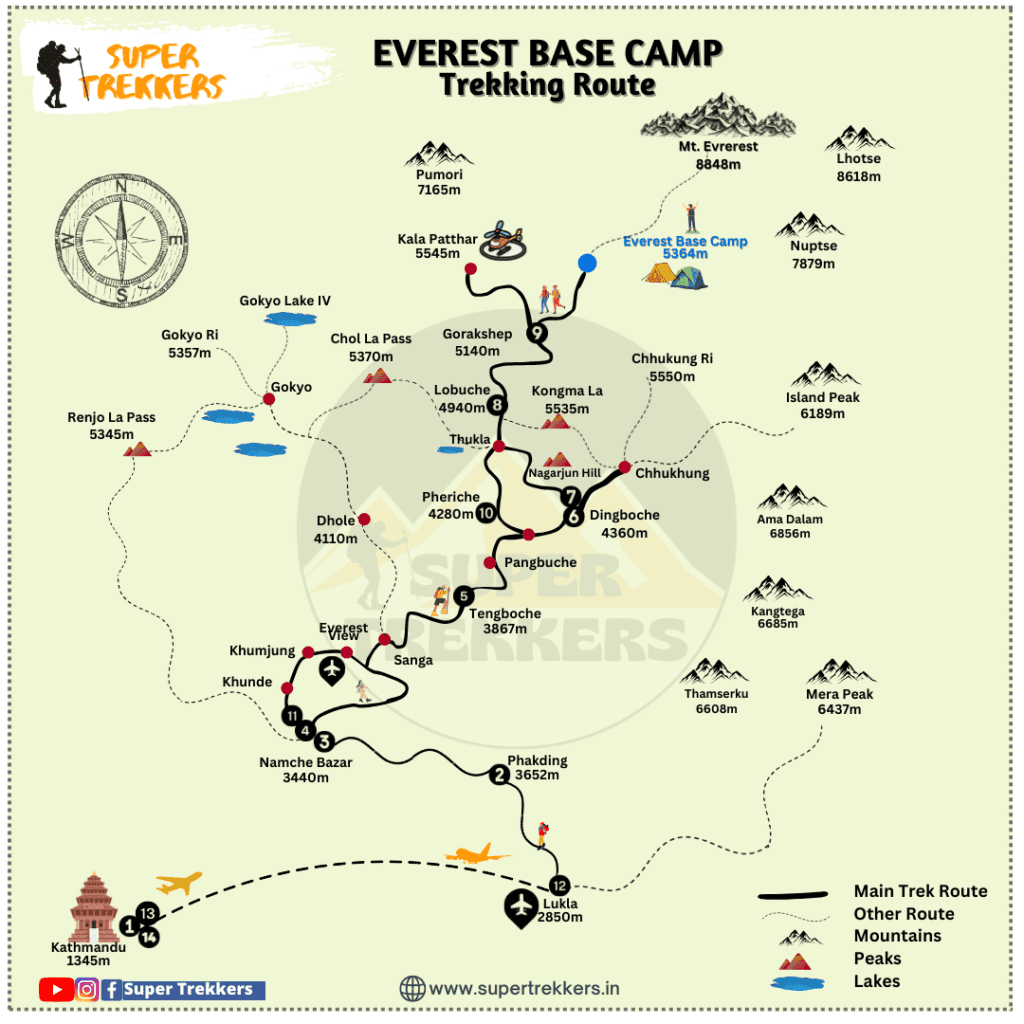
- Starting Point: Lukla (35min flight from Kathmandu)
- Popular Itinerary (12–16 days):
- Kathmandu → Lukla → Phakding → Namche Bazaar → Tengboche → Dingboche → Lobuche → Gorak Shep → Everest Base Camp → Kala Patthar → Descend via same route to Lukla
- Optional Extensions: Gokyo Lakes, Three Passes Trek, Jiri route

Complete Permits & Regulations Guide
Since 2023, Nepal has implemented new regulations for trekking. A key change is the mandatory guide for all foreign trekkers.
Everest Base Camp Trek Permits
- Sagarmatha National Park Entry Permit: This can be obtained in Kathmandu or at the park entrance.
- Khumbu Pasang Lhamu Rural Municipality Permit: This local permit is purchased in Lukla upon arrival.
- Mandatory Guide Rule: A licensed, government-certified guide is now required for the entire trek.
Annapurna Base Camp Trek Permits
- Annapurna Conservation Area Permit (ACAP): Available at the Nepal Tourism Board offices in Kathmandu or Pokhara.
- Mandatory Guide Rule: A licensed guide is also mandatory for all trekkers in the Annapurna Conservation Area.
Expert Tip: Booking through a reputable trekking agency simplifies the permit process, as they will handle all the paperwork for you.
Transportation & Logistics
- EBC: The journey to the trailhead is an adventure in itself. The flight to Lukla is a major logistical point, as it can be affected by weather. In peak season, flights may depart from Ramechhap, requiring an early morning, 6-hour drive from Kathmandu.
- ABC: Getting to the starting point is much more straightforward. The short drive from Pokhara to the trailhead is a scenic, reliable journey, making it a less stressful start to your trek.
Fitness Requirements & Training Tips
- EBC Fitness: The EBC trek requires excellent cardiovascular fitness and stamina. You should be able to hike for 6-8 hours daily with a backpack. Training should include long-distance jogging, swimming, cycling, and hiking with a weighted bag on trails with significant elevation changes.
- ABC Fitness: The ABC trek is more approachable. A good level of fitness is required, with an emphasis on endurance for climbing and descending stairs. Regular jogging, brisk walking, and leg-strengthening exercises are highly beneficial.
FAQs
- Which is more difficult, ABC or EBC Trek?
EBC is generally harder due to higher altitude and longer duration. - What is the highest altitude reached in both treks?
ABC Trek: 4,130m; EBC Trek: 5,364m (Kala Patthar 5,555m). - Is ABC Trek safer in monsoon season?
No, ABC trail sees leech infestation and landslide risk in monsoons; plan for pre/post-monsoon. - Do I need a guide for ABC or EBC Trek?
Yes, for foreign trekkers, a government-licensed guide is now mandatory for both the Everest and Annapurna regions. This rule was implemented for the safety and security of trekkers. - Best season for ABC Trek?
March–May, September–November. - Best season for EBC Trek?
Same as ABC—March–May, September–November. - Which trek has better accommodation?
ABC generally offers superior tea houses due to easier logistics. - Can beginners do these treks?
ABC is achievable by fit beginners; EBC requires more preparation. - Which trek has more crowds?
EBC sees higher crowds, especially peak season. - Do both treks offer Wi-Fi?
Limited Wi-Fi is available in most ABC tea houses and EBC lodges. - How to avoid altitude sickness on EBC Trek?
Slow ascent, acclimatization days, stay hydrated, avoid alcohol. - Is EBC possible in winter?
Yes, but harsh cold and snow make it challenging. - Is food vegetarian-friendly?
Both trails offer vegetarian options, though variety is better on ABC. - Is ABC Trek less expensive?
Usually, yes—ABC is less expensive than EBC due to logistics. - Are both treks family-friendly?
ABC is more suitable for families/older trekkers due to lower altitude. - Which trek is better for photography?
Both are stunning; EBC offers Everest vistas, ABC excels with lush landscapes. - What permits are needed for ABC/EBC?
ABC: ACAP & TIMS; EBC: Sagarmatha NP permit & TIMS. - How reliable are flights to Lukla for EBC Trek?
Lukla flights often delayed by weather; factor buffer days. - Can Super Trekkers arrange everything?
Yes, Super Trekkers offers guided packages covering permits, planning, safety, and logistics. - Is there mobile coverage on the trek?
Patchy but available in main villages.
Conclusion
Both the Annapurna Base Camp and Everest Base Camp treks offer unforgettable Himalayan adventures, each with distinct landscapes, levels of challenge, and cultural highlights. ABC Trek charms with lush forests, vibrant village life, and a gentler approach; EBC Trek tests your limits with its towering peaks and legendary status.
If you’re seeking a seamless trek experience—with expert guides, comprehensive safety planning, and hassle-free logistics—choose Super Trekkers. From your first question to your final summit, Super Trekkers ensures every detail is handled so you can focus on savoring Nepal’s mountain magic.
Book your guided ABC or EBC Trek with Super Trekkers today and transform your Himalayan dream into reality!
Related Trek Suggestions
If these treks have piqued your interest, but you’re looking for something different, consider these related adventures in the Himalayas:
- Goecha La Trek, Sikkim, India: A challenging trek offering incredible views of Kanchenjunga.
- Chadar Trek, Ladakh, India: A unique winter trek across a frozen river.
- Valley of Flowers Trek, Uttarakhand, India: A vibrant, moderate trek in a UNESCO World Heritage site, famous for its alpine meadows.
- Markha Valley Trek, Ladakh, India: A high-altitude trek through dramatic landscapes and ancient monasteries.
- Annapurna Circuit Trek, Nepal: A longer, classic trek that circumnavigates the entire Annapurna massif.